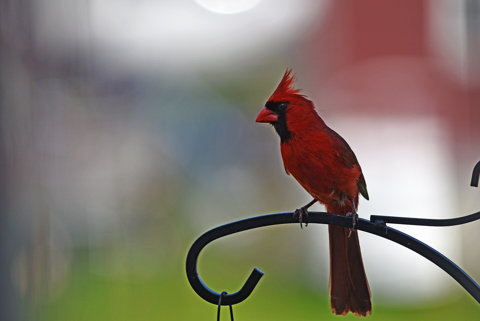
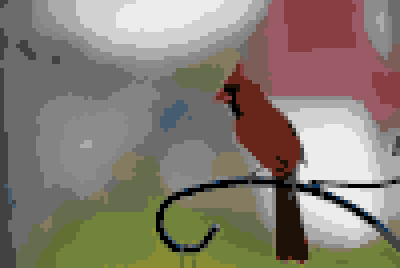
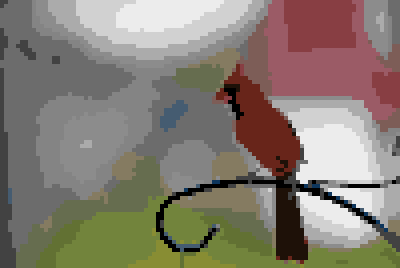
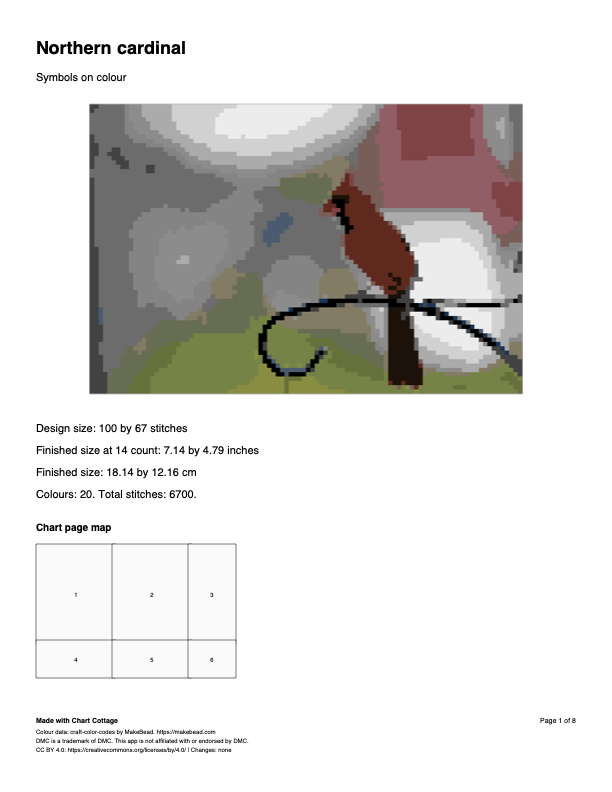

Compare one bird with the settings held steady
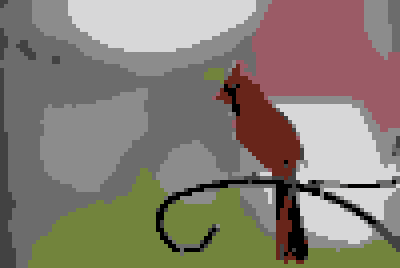
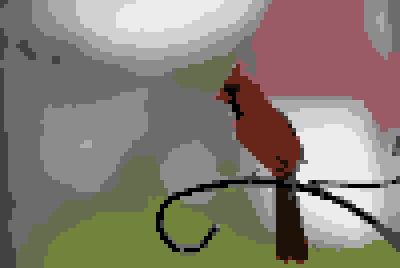
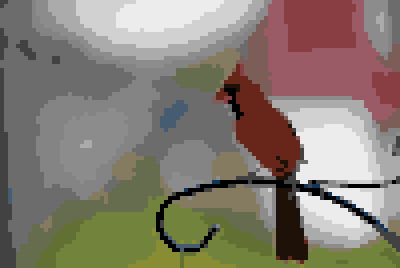
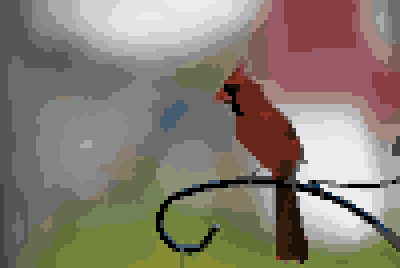
We converted the same uncropped cardinal at four colour limits. The stitch width, fabric count, strands and clean-up settings stayed fixed. Each limit got its own conversion. This matters because a new palette can change where many stitches go; it is not simply the large palette with a few rows deleted.
The previews and table use the cleaned grids. The colour error is mean CIEDE2000, a measure of difference between colours. Each square is compared with the matching square of the resized source photo. Lower means a closer average match to those source colours. It is not a score for how pleasant the chart is to stitch, or a promise about real floss under your room's light.
| Colour limit | Colours used | Mean CIEDE2000 | Confetti share | Skeins to buy |
|---|---|---|---|---|
| 8 | 8 | 6.5791 | 1.09% | 8 |
| 12 | 12 | 5.7088 | 0.93% | 12 |
| 20 | 20 | 5.1415 | 1.18% | 20 |
| 30 | 30 | 4.6489 | 1.28% | 30 |
Read the colour score beside the work
Look at the bird's red chest and the boundary of its dark face before looking at the score. A lower average difference can still hide a poor choice around the eye. Small details occupy little of the picture, so they can matter greatly to recognition while changing the average only slightly.
Confetti share counts isolated squares with no matching neighbour along an edge. More isolated squares can mean more starts, stops and decisions about carrying thread. The count alone cannot tell us how long you will stitch. We did not time anyone stitching these charts. Long runs and a few scattered details can feel very different even with the same palette size.
Plan the thread purchase
The skein total rounds each shade up on its own, then adds the rows. It assumes you start without a stash. A higher total means more whole skeins in this shopping estimate, not that all of that floss will be used. Check your labelled leftovers before buying, and use actual shop prices when deciding the cost.
Start with the simplest version that still looks like your subject. If the chest loses its shape, try the next palette. If extra shades appear only as stray dots in the background, consider merging them after checking the face. Keep a copy before editing. The most useful choice balances the picture you want with the thread changes you are willing to make.