

Give the face enough of the picture
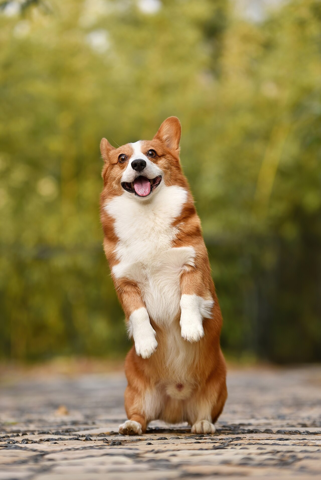
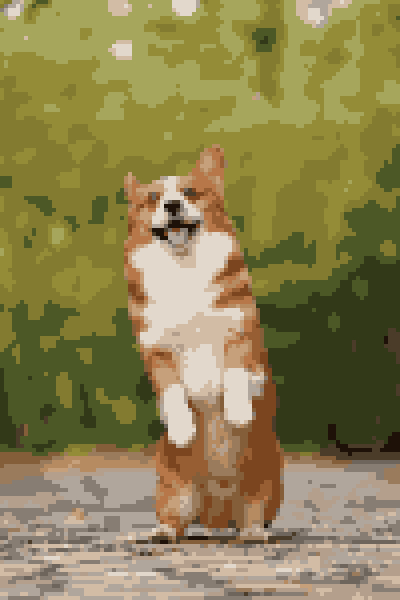
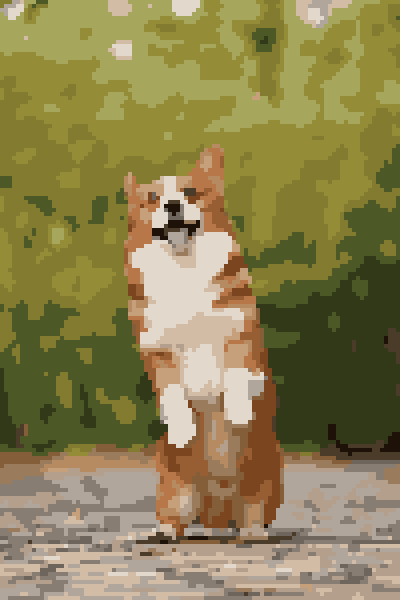
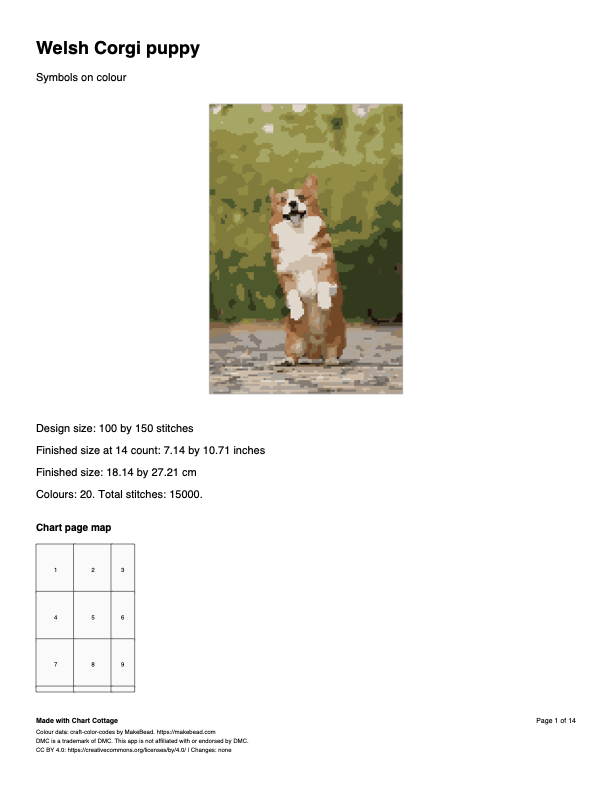
The standing corgi is charming, but its head takes up a small part of the whole frame. Keeping the whole body also keeps the path and much of the greenery. If you want a face portrait, crop first. If you want the pose, accept that the face has fewer squares to work with at the same chart width.
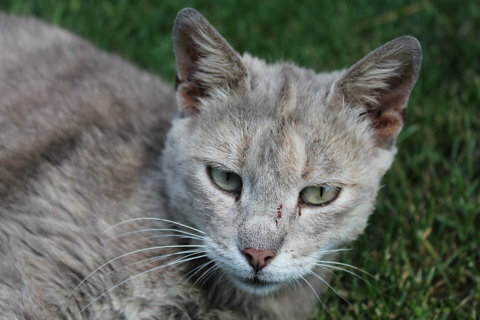
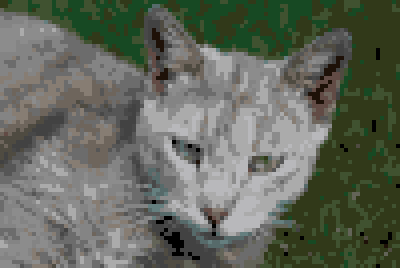
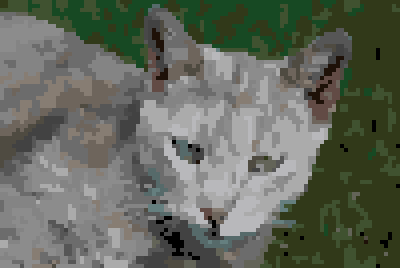
The cat photo starts closer to the face. Look at the ears, nose and pale fur around the eyes in the after preview. That makes it easier to judge whether the animal still looks like itself. The green surroundings remain in the pattern because we did not remove the background for this test.
Keep character before chasing a smaller count
Confetti is a stitching workload clue, not a score for likeness. A single pale stitch can be a reflection in an eye. A single dark stitch can define the nose. Inspect those spots against the source before accepting a change. Repeating fur texture matters less if it hides the expression you wanted to keep.
The cat starts with a larger measured confetti share than the corgi under the same settings. That does not make it a worse photo. Fine fur and grass create more small colour regions. Judge the result by the features you recognise, then decide whether the remaining detail is worth stitching.
Choose a background on purpose
A blank cloth background and a stitched green background are different projects. Crop away what you can before conversion. If the pet has pale fur, check that it still stands out from the cloth you choose. With dark fur, use a well-lit photo that separates the eyes from the rest of the face. Raising the colour limit cannot reveal detail that was never visible.
Check supplies before making it a gift
The whole corgi test needs 15000 stitched squares; the cat needs 6700. Those are the tested grids, not estimates of hours to finish. Both thread lists use the fabric and strand settings in the method. Check your stash by DMC number, keep extra fabric for finishing and print a readable test before choosing a deadline.